
Crypto is evolving fast and two of the biggest narratives and debate is these days is between RWA vs DeFi:
👉 RWA (Real World Assets)
👉 DeFi (Decentralized Finance)
Both promise to transform finance, but in very different ways. So the real question is: Which one has more long-term potential? In this guide, we’ll break it down in simple terms so you can make smarter decisions. Before exploring RWA vs DeFi, it’s important to understand risk management in crypto trading to protect your capital. To understand the basics, read our beginner guide on what RWA in crypto means.
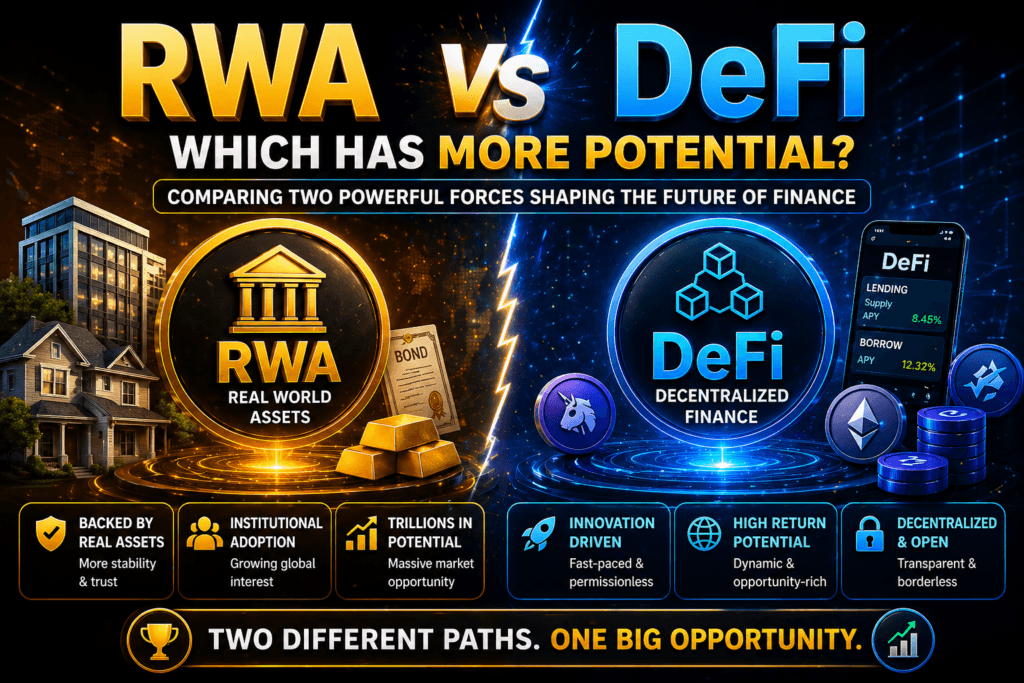
🧠 What Is RWA in Crypto?
RWA (Real World Assets) refers to bringing real-world assets onto the blockchain.
Examples include:
- 🏠 Real estate
- 📄 Bonds
- 🪙 Commodities
- 💵 Treasury assets
👉 These assets are tokenized, making them:
- Easier to trade
- More accessible
- More liquid
You can explore this further in our detailed guide on why RWA crypto is the next big trend in blockchain.
🔗 What Is DeFi?
DeFi (Decentralized Finance) is a system that allows users to access financial services without intermediaries.
Examples include:
- 💰 Lending & borrowing
- 🔄 Decentralized exchanges (Uniswap V4, Pancake Swap)
- 🧮 Yield farming
- 🏦 Staking
👉 Everything runs on smart contracts. Many DeFi strategies rely on proper execution using tools like take-profit orders in crypto to lock in gains.
⚔️ RWA vs DeFi: Key Differences
| Feature | RWA | DeFi |
|---|---|---|
| Asset Type | Real-world assets | Digital assets |
| Backing | Physical / off-chain | On-chain |
| Stability | More stable | More volatile |
| Risk Level | Moderate | High (in many cases) |
| Adoption | Growing (institutions) | Already established |
Understanding how to read crypto charts can also help you decide when to enter RWA or DeFi opportunities.
📊 Why RWA Is Gaining Attention
👉 RWA connects traditional finance + crypto.
Key advantages:
- 🌍 Trillions in market potential
- 🏦 Institutional interest rising
- 📉 Lower volatility vs DeFi
👉 This is why many believe RWA could be the next big wave.
🔥 Why DeFi Still Matters
DeFi isn’t going anywhere.
Key advantages:
- 🚀 High earning potential
- 🔓 Full decentralization
- 🌐 Global accessibility
👉 It remains the foundation of Web3 finance.
📈 Growth Potential: RWA vs DeFi
👉 RWA Potential:
- Early-stage growth
- Institutional adoption
- Real-world integration
Institutional adoption is a key driver behind RWA’s growth.
👉 DeFi Potential:
- Innovation-driven
- High returns (but risky)
- Mature ecosystem
DeFi continues to evolve with new yield strategies and protocols.
⚠️ RWA vs DeFi – Risks to Consider
RWA Risks:
- Regulatory challenges
- Dependency on real-world systems
DeFi Risks:
- Smart contract bugs
- High volatility
- Liquidity risks
👉 This is why risk management in crypto trading is critical. Also, learn how to manage downside using stop-loss orders in crypto and avoid emotional decisions.
🧮 Smart Strategy for Investors
Instead of choosing one:
👉 Consider diversification and before investing always use relevant tools to make smart decisions:
- Allocate to both RWA + DeFi
- Use dollar cost averaging strategy
- Track performance using crypto ROI tools
- Always check exchange fees before choosing one
⚡ Quick Tip
👉 Don’t chase trends blindly. You must focus on:
- Real utility
- Adoption
- Risk vs reward
🚀 Final Verdict – RWA vs DeFi
So, which has more potential?
👉 RWA = Safer, long-term, institutional growth
👉 DeFi = Higher risk, higher reward, innovation-driven
👉 The smart move? Exposure to both.
Key Takeaways
- RWA (Real World Assets) brings traditional assets like real estate and bonds onto blockchain through tokenization.
- DeFi (Decentralized Finance) enables financial services like lending, trading, and staking without intermediaries.
- RWA offers more stability and long-term institutional growth potential.
- DeFi provides higher returns but comes with higher volatility and risks.
- A balanced strategy often includes exposure to both RWA and DeFi for diversification.
Frequently Asked Questions (FAQ)
1. What is the difference between RWA and DeFi?
RWA focuses on tokenizing real-world assets like real estate and bonds, while DeFi provides decentralized financial services such as lending and trading using crypto assets.
2. Which is better, RWA or DeFi?
RWA is generally considered more stable with long-term potential, while DeFi offers higher returns but comes with higher risks.
3. Is RWA safer than DeFi?
RWA can be relatively more stable due to real-world backing, but it still carries risks like regulation and asset verification.
4. Can I invest in both RWA and DeFi?
Yes, many investors diversify by allocating funds to both RWA and DeFi to balance risk and returns.
5. What are the risks of DeFi compared to RWA?
DeFi risks include smart contract vulnerabilities, high volatility, and liquidity risks, while RWA risks involve regulation and reliance on off-chain assets.