
Real estate has always been one of the most valuable asset classes in the world but it comes with problems:
- High entry barriers
- Lack of liquidity
- Slow transactions
- Complex paperwork
👉 This is where blockchain is real estate starting to change everything. This concept is part of a broader trend known as RWA crypto, which brings real-world assets onto the blockchain.
Through RWA (Real World Asset) tokenization, real estate is becoming:
- More accessible
- More liquid
- More transparent
In this guide, you’ll learn how blockchain is transforming real estate in simple terms.
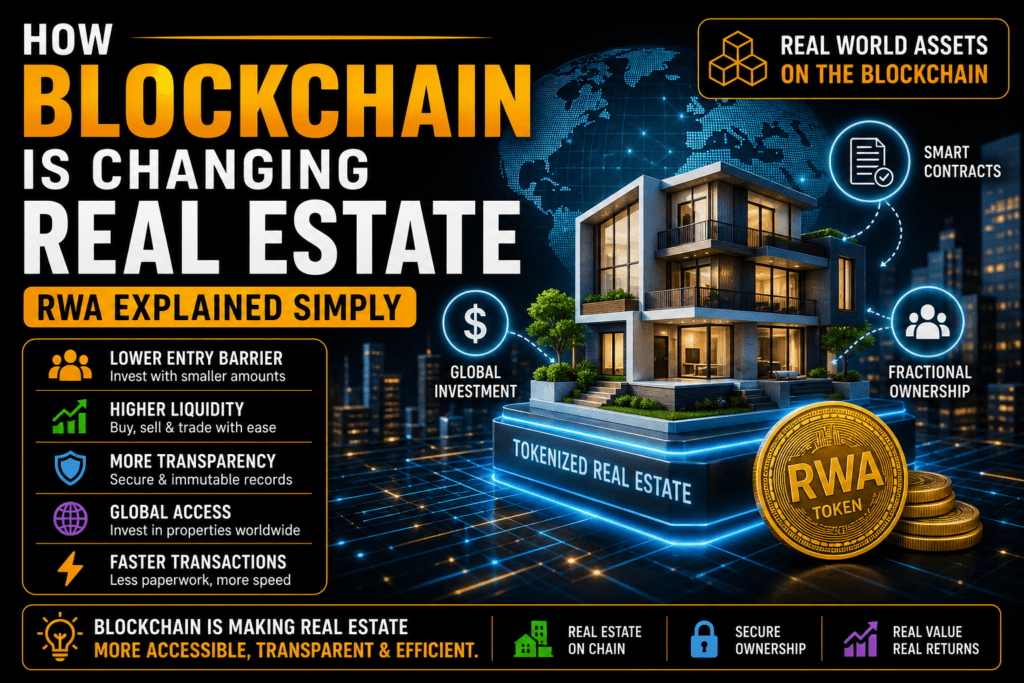
🧠 What Is RWA in Real Estate?
RWA stands for Real World Assets.
👉 In crypto, it means bringing physical assets like:
- Real estate
- Gold
- Bonds
…onto the blockchain.
In real estate specifically:
👉 Properties are tokenized into digital tokens
👉 Each token represents ownership (full or fractional)
🏢 What Is Real Estate Tokenization?
Real estate tokenization means converting property ownership into digital tokens on a blockchain. Instead of buying an entire property: 👉 You can buy a fraction of it
Example:
- A $1,000,000 property
- Divided into 1,000 tokens
- Each token = $1,000
⚡ Why Blockchain Is Changing Real Estate
💸 1. Lower Investment Barrier
Traditional real estate requires huge capital.
With blockchain:
- You can start with small amounts
- Access global properties
🔄 2. Increased Liquidity
Real estate is usually hard to sell but tokenization allows improved liquidity and this is one of the key advantages of tokenized assets compared to traditional investments.
- Faster buying/selling
- Secondary markets
📜 3. Transparency
Blockchain records reduces fraud & disputes because they are:
✔ Public
✔ Immutable
✔ Verifiable
Blockchain technology ensures transparency by recording every transaction on a public ledger.
⚡ 4. Faster Transactions
Traditional deals take weeks or months. On the other hand, blockchain can:
- Reduce intermediaries
- Speed up transactions
🌍 5. Global Access
Anyone can invest from anywhere. here is no need for:
- Local brokers
- Complex paperwork
🧱 How It Works (Simple Process)
- Property is evaluated
- Ownership is tokenized
- Tokens are issued on blockchain
- Investors buy tokens
- Returns (rent/profit) distributed
This process is similar to how tokenized assets are created & traded in the broader crypto ecosystem.
💰 Benefits for Investors
✔ Fractional ownership
✔ Diversification
✔ Passive income potential
✔ Global investment access
Investors can diversify their portfolio by combining real estate exposure with other crypto assets.
⚠️ Risks of RWA Real Estate
Let’s be realistic, this is not risk-free. Hence, always research before investing.
❌ Regulatory uncertainty
❌ Platform risk
❌ Liquidity still developing
❌ Market volatility
🧠 Real Example (Conceptual)
Fractional ownership allows investors to participate in high-value markets with smaller capital. That’s the power of tokenization.
👉 You invest $500 in a property in Dubai
👉 Earn rental income proportionally
👉 Sell tokens anytime (if market exists)
🔥 Why This Matters for the Future
RWA + blockchain – Many believe this is one of the biggest crypto use cases and could unlock trillions of dollars in value by bringing traditional assets onto blockchain.
- Democratize real estate
- Increase global participation
- Unlock trillions in value
⚡ RWA vs Traditional Real Estate
| Feature | Traditional | Blockchain |
|---|---|---|
| Entry Cost | High | Low |
| Liquidity | Low | Medium–High |
| Transparency | Limited | High |
| Speed | Slow | Fast |
🚀 Final Thoughts
Blockchain is not replacing real estate. It’s upgrading it. Through RWA, real estate is becoming:
- More accessible
- More efficient
- More global
Key Takeaways
- Blockchain in real estate enables tokenization of properties through RWA (Real World Assets).
- Tokenization allows fractional ownership, making real estate more accessible to investors.
- Blockchain improves transparency, reduces fraud, and speeds up property transactions.
- Investors can gain exposure to global real estate markets with smaller capital.
- Despite its potential, risks include regulation, platform security, and market liquidity.
Frequently Asked Questions (FAQ)
1. What is blockchain in real estate?
Blockchain in real estate refers to using blockchain technology to record, manage, and transfer property ownership, often through tokenization.
2. What is real estate tokenization?
Real estate tokenization is the process of converting property ownership into digital tokens that can be bought and sold on blockchain platforms.
3. Can I invest in real estate with small amounts using blockchain?
Yes, tokenization allows fractional ownership, enabling investors to invest in real estate with smaller amounts of money.
4. Is blockchain real estate safe?
It offers transparency and security, but risks still exist, including regulatory uncertainty and platform reliability.
5. What are the benefits of RWA in real estate?
Benefits include increased accessibility, liquidity, transparency, and faster transactions compared to traditional real estate.