
Crypto trading can be exciting but it’s also highly risky. Prices can rise quickly but they can fall just as fast. Without proper planning, even a few bad trades can wipe out your portfolio. That’s where risk management in crypto trading comes in. To learn how price differences impact your trades, read our guide on slippage in crypto trading.
In this beginner-friendly guide, you’ll learn:
- What risk management is
- Why it’s essential
- Key strategies used by smart traders
- How to protect your capital and grow sustainably
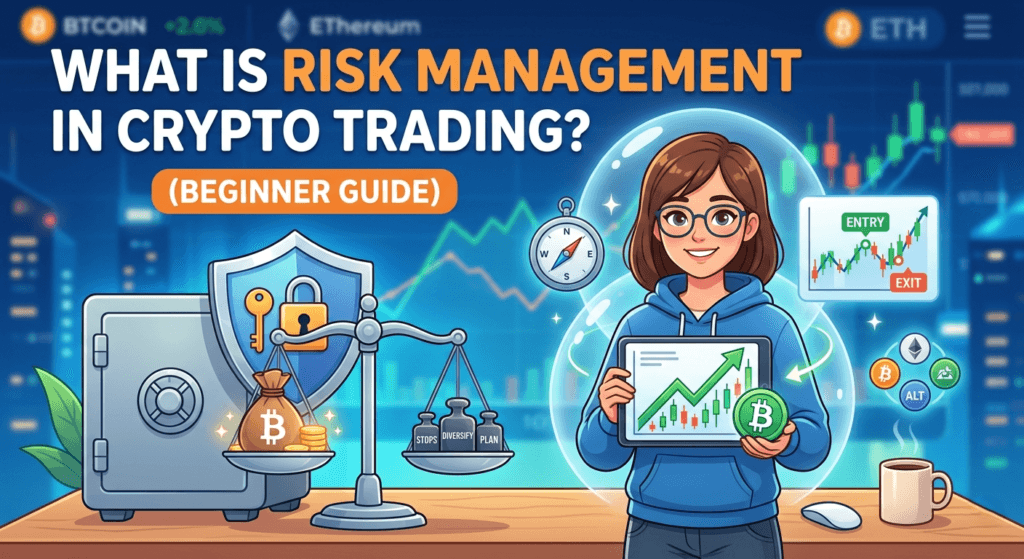
What Is Risk Management in Crypto Trading?
Risk management in crypto trading is the process of controlling potential losses while maximizing long-term gains.
In simple terms: It’s about protecting your money first, then making profits. Instead of focusing only on winning trades, experienced traders focus on:
- Limiting losses
- Managing exposure
- Staying consistent
Why Risk Management Is Important
Crypto markets are:
- Highly volatile
- Influenced by news & sentiment
- Prone to sudden price swings
Without risk management:
- One bad trade can cause large losses
- Emotional decisions increase
- Long-term success becomes unlikely
With proper risk management, you:
- Protect your capital
- Trade with confidence
- Stay in the market longer
Key Principles of Risk Management
 1. Never Risk More Than You Can Afford to Lose
 1. Never Risk More Than You Can Afford to Lose
Only trade with money you can afford to lose.
Avoid:
- Borrowing money
- Using emergency funds
2. Use Stop-Loss Orders
A stop-loss automatically exits your trade at a predefined price.
This helps:
- Limit losses
- Avoid emotional decisions
Example:
- Buy Bitcoin at $70,000
- Set stop-loss at $68,000
Loss is controlled if price drops
- Set stop-loss at $68,000
3. Position Sizing
Don’t put all your money into one trade.
Instead:
- Allocate a small percentage per trade (e.g., 1-5%)
This ensures:
- One bad trade won’t ruin your portfolio
4. Diversification
Avoid investing everything in one asset.
Spread across:
- Other strong projects
This reduces overall risk.
5. Risk-to-Reward Ratio
Before entering a trade, ask:
“Is the potential reward worth the risk?”
Example:
- Risk: $100
- Reward: $300
Good trade (1:3 ratio)
- Reward: $300
Common Risk Management Strategies
Fixed Percentage Risk
 Fixed Percentage Risk
Risk only a small percentage per trade (e.g., 2%).
Dollar Cost Averaging (DCA)
Invest small amounts over time instead of one big investment. This reduces timing risk
Using Take-Profit Orders
Lock in profits automatically when price reaches a target.
Common Mistakes to Avoid
- Trading without a stop-loss
- Overtrading
- Using high leverage
- Ignoring fees and slippage
- Investing based on emotions
These mistakes can quickly lead to losses.
Tools to Improve Risk Management
You can use tools to make better decisions:
- Crypto ROI Calculator → Track performance
- DCA Calculator → Plan long-term strategy
- Exchange Fee Comparison Tool → Reduce costs
Using the right tools improves efficiency and outcomes.
Security Is Part of Risk Management
Risk is not only about trading.
It also includes:
- Exchange risks
- Hacks
- Fund security
Always:
- Use trusted exchanges
- Store long-term holdings in hardware wallets
Final Thoughts
Risk management is the foundation of successful crypto trading. It’s not about avoiding losses completely – It’s about controlling them.
Smart traders:
- Protect capital
- Stay consistent
- Focus on long-term growth
Whether you’re a beginner or experienced trader, mastering risk management can significantly improve your results.
Key Takeaways
- Risk management in crypto trading helps protect your capital and minimize losses.
- Using stop-loss orders is essential to control downside risk.
- Never risk more than 1-5% of your capital on a single trade.
- Diversification reduces exposure to a single asset’s volatility.
- Consistent strategy and discipline matter more than chasing profits.
Frequently Asked Questions (FAQ)
1. What is risk management in crypto trading?
Risk management in crypto trading is the process of limiting losses and protecting your capital while trading cryptocurrencies.
2. Why is risk management important in crypto?
Crypto markets are highly volatile, and without risk management, traders can face significant and sudden losses.
3. What is a good risk percentage per trade?
Most traders risk between 1% to 5% of their total capital per trade.
4. How can beginners manage risk in crypto trading?
Beginners can manage risk by using stop-loss orders, diversifying investments, and using strategies like dollar-cost averaging.
5. Is diversification important in crypto trading?
Yes, diversification helps reduce overall risk by spreading investments across multiple cryptocurrencies.