
Crypto trading can be fast, volatile, and sometimes unpredictable. You may place a trade at one price, but it executes at a different price. This difference is called slippage. In this beginner-friendly guide, you’ll learn what slippage is, why it happens, and how to reduce it while trading crypto.
What Is Slippage in Crypto?
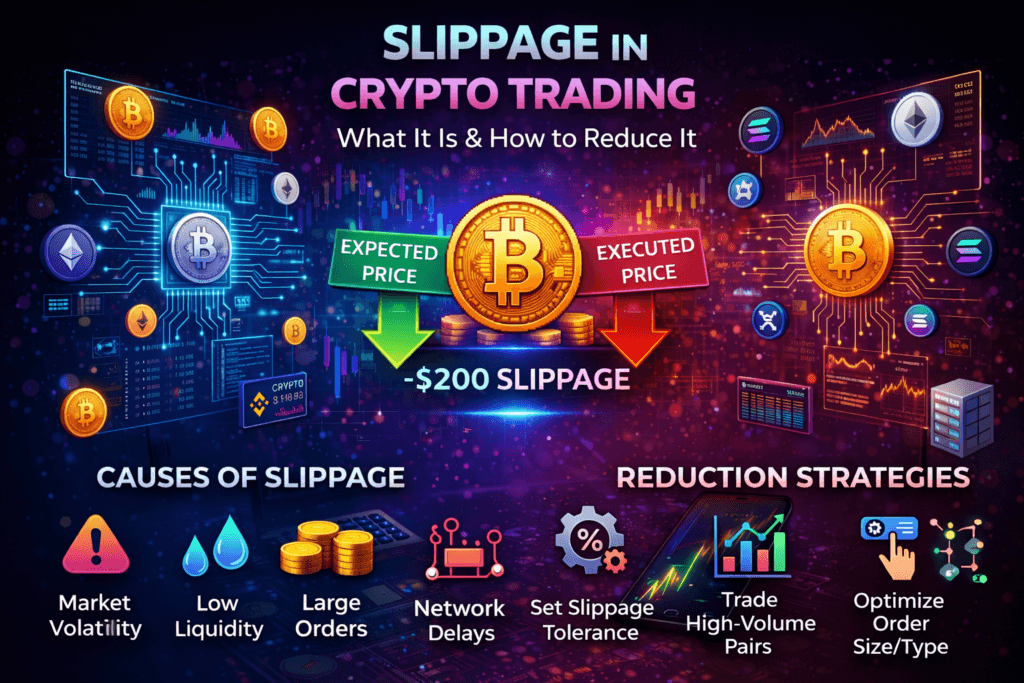
Slippage is the difference between the expected price of a trade and the actual price at which the trade is executed.
In simple terms: You try to buy or sell at one price, but the final price is slightly different.
Types of Slippage
1. Positive Slippage
- You get a better price than expected
- Example: You buy at a lower price than planned
This benefits you.
2. Negative Slippage
- You get a worse price than expected
- Example: You buy at a higher price than planned
This is more common in crypto trading.
Example of Slippage
Let’s say:
- You place a buy order for Bitcoin at $30,000
- Due to rapid price movement, the order executes at $30,200
Slippage = $200
This difference can impact your overall profit.
Why Does Slippage Happen?
Slippage occurs mainly due to:
1. Market Volatility
Crypto prices change rapidly, especially during news events or large trades.
2. Low Liquidity
If there are not enough buyers or sellers, your order may fill at different price levels.
3. Large Order Size
Big trades can move the market price while being executed.
4. Network Delays
Slow transaction confirmation can result in price changes before execution.
How Slippage Affects Your Profit
Even small slippage can impact your returns.
For example:
- You expect a 10% profit
- Slippage reduces it to 8%
Over multiple trades, this adds up significantly.
How to Reduce Slippage in Crypto Trading
1. Use Limit Orders
Limit orders allow you to set a specific price. This reduces unexpected price changes.
2. Trade During High Liquidity
Trade when the market is active (higher volume). This ensures better price matching.
3. Avoid Large Market Orders
Break large trades into smaller ones.
4. Choose the Right Exchange
Using reliable exchanges with high liquidity can help reduce slippage during trades.
5. Adjust Slippage Tolerance (For DeFi)
Many decentralized exchanges allow you to set slippage tolerance.
Slippage in DeFi vs Centralized Exchanges
- DeFi platforms: Higher slippage due to lower liquidity
- Centralized exchanges: Usually lower slippage
Always compare before trading.
Slippage vs Spread: What’s the Difference?
- Spread: Difference between buy and sell price
- Slippage: Difference between expected and executed price
Both impact your trading cost.
Tools to Improve Your Trading Decisions
Understanding slippage is just one part of profitable trading. You should also track your overall investment performance.
- 👉 Use our Crypto ROI Calculator to measure your returns
- 👉 Use our DCA Calculator to plan long-term investments
- 👉 Use our Wealth Goal Calculator to estimate potential growth
These tools help you make smarter decisions and reduce risk.
Security Tip: Protect Your Crypto
After trading, keeping your funds secure is critical. For long-term storage, consider using a hardware wallet to protect your assets from exchange risks.
Final Thoughts
Slippage is a normal part of crypto trading, especially in volatile markets. However, by understanding how it works and taking simple precautions, you can minimize its impact. In crypto trading, small details like slippage can make a big difference in your overall returns.
Key Takeaways
- Slippage in crypto trading is the difference between the expected price and the actual execution price.
- It can be positive (better price) or negative (worse price), with negative slippage being more common.
- Slippage occurs due to market volatility, low liquidity, and large order sizes.
- Using limit orders and trading during high liquidity can help reduce slippage.
- Even small slippage can impact overall trading profits over time.
Frequently Asked Questions (FAQ)
1. What is slippage in crypto trading?
Slippage in crypto trading is the difference between the expected price of a trade and the actual price at which it is executed.
2. Why does slippage happen in crypto?
Slippage occurs due to market volatility, low liquidity, large order sizes, and delays in trade execution.
3. Is slippage always bad?
No, slippage can be positive or negative. Positive slippage gives you a better price, while negative slippage results in a worse price.
4. How can I reduce slippage in crypto trading?
You can reduce slippage by using limit orders, trading during high liquidity, avoiding large orders, and choosing reliable exchanges.
5. What is the difference between slippage and spread?
Spread is the difference between the buy and sell price, while slippage is the difference between expected and executed trade price.