
Ethereum is one of the most popular blockchains in the world. However, one thing that often confuses beginners is gas fees. Many users are surprised when they see high transaction costs while sending ETH or using decentralized apps. So, what exactly are Ethereum gas fees? And why do they sometimes become so expensive? In this guide, we’ll explain everything in simple terms.
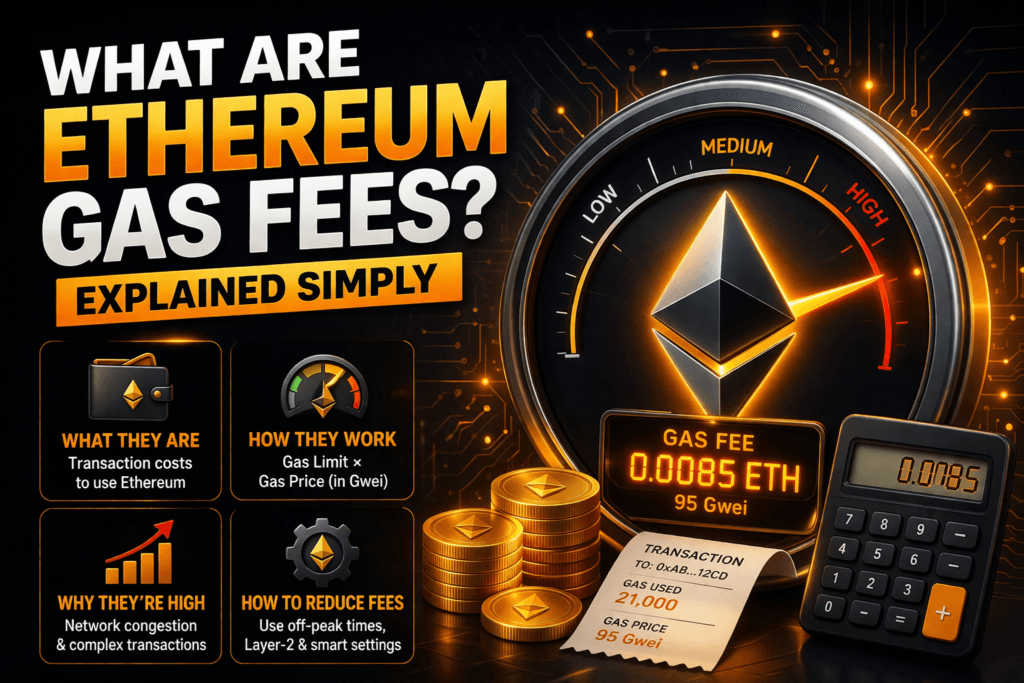
What Are Ethereum Gas Fees?
Ethereum gas fees are the transaction costs you pay to use the Ethereum network. Every action on Ethereum requires computational power.
For example:
- Sending ETH to another wallet
- Buying or selling NFTs
- Swapping tokens on decentralized exchanges
- Interacting with smart contracts
Because of this, users must pay a fee to compensate validators who process and secure these transactions. In simple words: Gas fees are the price you pay to use Ethereum. To use Ethereum, you’ll need a crypto exchange. You can buy ETH on trusted platforms like Binance, KuCoin, WazirX, and Pionex.
Why Are They Called “Gas” Fees?
The term “gas” represents the unit of computational work required to perform an action on Ethereum.
Just like a car needs fuel to run, Ethereum transactions need gas to be processed.
- More complex transactions = more gas required
- Simple transfers = less gas required
How Do Ethereum Gas Fees Work?
Ethereum gas fees are calculated using this formula:
Gas Fee = Gas Limit × Gas Price
Let’s break it down:
- Gas Limit → Maximum amount of gas needed for a transaction
- Gas Price → Amount you’re willing to pay per unit of gas
Gas prices are usually measured in Gwei (a small unit of ETH). To understand how transaction costs affect your overall profit, check out our guide on What Is Crypto ROI?
Why Are Ethereum Gas Fees So High?
Gas fees are not fixed. They change based on network conditions.
Here are the main reasons why fees increase:
1. Network Congestion
When many users are making transactions, demand increases.
As a result:
- Users compete to get their transactions processed faster
- Higher fees are required
2. Complex Transactions
Some actions require more computational power.
For example:
- NFT minting
- DeFi transactions
- Smart contract interactions
These cost more than simple ETH transfers.
3. Supply and Demand
Ethereum works like an auction system.
- Higher demand = higher gas fees
- Lower demand = cheaper transactions
What Is Base Fee and Priority Fee?
After Ethereum’s upgrade (EIP-1559), gas fees now include:
- Base Fee → Mandatory fee set by the network
- Priority Fee (Tip) → Extra amount paid to validators for faster processing
This system makes fees more predictable, but they can still fluctuate.
How to Reduce Ethereum Gas Fees
Here are some practical ways to save money:
1. Use the Network During Off-Peak Hours
Gas fees are usually lower when fewer people are using the network.
2. Choose the Right Time
Avoid peak times like:
- NFT launches
- Major market movements
3. Use Layer-2 Solutions
Networks like Arbitrum or Optimism offer much lower fees.
4. Adjust Gas Settings
Some wallets allow you to manually set gas fees. However, setting too low may delay your transaction.
5. Batch Transactions
If possible, combine multiple actions into one transaction.
You can also use our Crypto ROI Calculator to estimate how fees impact your overall returns.
Are Ethereum Gas Fees a Problem?
Gas fees can be a drawback, especially for small investors.
However:
- They help secure the network
- They prevent spam transactions
- They support decentralization
Ethereum is also improving scalability, which may reduce fees over time.
Who Should Care About Gas Fees?
Gas fees matter most for:
- Active traders
- DeFi users
- NFT buyers
- Small investors (due to cost impact)
If you’re just holding ETH long-term, gas fees may not affect you much. However, for the long-term security of your crypto do check/compare the safest hardware wallets in market before making a decision.
Final Thoughts
Ethereum gas fees are an essential part of how the network works. While they can sometimes be expensive, they ensure that transactions are processed securely and efficiently.
Understanding how gas fees work can help you:
- Save money
- Make better transaction decisions
- Avoid overpaying
As Ethereum continues to evolve, gas fees may become more affordable. Until then, smart timing and strategy can make a big difference. You can buy and use Ethereum on trusted exchanges like Binance, KuCoin, WazirX, and Pionex.
If you’re planning to start using Ethereum, choose exchanges with low trading fees to reduce your overall costs. Check our free tool for comparing exchange fee.
Key Takeaways
- Ethereum gas fees are transaction costs required to use the Ethereum network.
- Fees are calculated using gas limit and gas price, usually measured in Gwei.
- Gas fees increase during high network demand and complex transactions.
- The EIP-1559 upgrade introduced base fee and priority fee (tips).
- You can reduce gas fees by choosing off-peak times or using Layer-2 solutions.
Frequently Asked Questions (FAQ)
1. What are Ethereum gas fees?
Ethereum gas fees are the transaction costs paid to validators for processing and securing transactions on the network.
2. Why are Ethereum gas fees so high?
Gas fees increase due to network congestion, high demand, and complex transactions like DeFi or NFT interactions.
3. What is gas price in Ethereum?
Gas price is the amount you pay per unit of gas, usually measured in Gwei, a small fraction of ETH.
4. How can I reduce Ethereum gas fees?
You can reduce fees by transacting during off-peak hours, using Layer-2 networks, or adjusting gas settings.
5. Are Ethereum gas fees fixed?
No, gas fees are dynamic and change based on network demand and transaction complexity.