
Built-in crypto wallet technology could become one of the most important developments in the future of digital finance. For years, cryptocurrency users have typically needed separate apps, exchange accounts, or hardware devices to store and manage their digital assets. However, what if that changed?
Imagine purchasing a new smartphone and discovering that it already includes a secure crypto wallet by default, just like a camera, calculator, or web browser. In other words, cryptocurrency functionality could become a standard smartphone feature as adoption continues expanding and many industry observers are beginning to ask a fascinating question:
👉 What happens if every smartphone comes with a built-in crypto wallet?
In 2026, hundreds of millions of people already use smartphones as their primary gateway to banking, payments, and online services. Consequently, integrating crypto wallets directly into mobile devices could dramatically accelerate global cryptocurrency adoption.
Built-in crypto wallets could make digital assets as accessible as mobile banking, potentially bringing cryptocurrency to billions of smartphone users worldwide.
📱 Why Smartphones Matter So Much
Smartphones have become the most widely used financial technology device on Earth. Today, people use smartphones for:
📲 Mobile payments
🏦 Banking applications
💳 Digital wallets
🌍 International transfers
🛒 Online shopping
Therefore, smartphones already function as financial hubs for billions of individuals worldwide. If crypto wallets became standard smartphone features, cryptocurrency could become significantly easier to access.
🔐 What Is A Built-In Crypto Wallet?
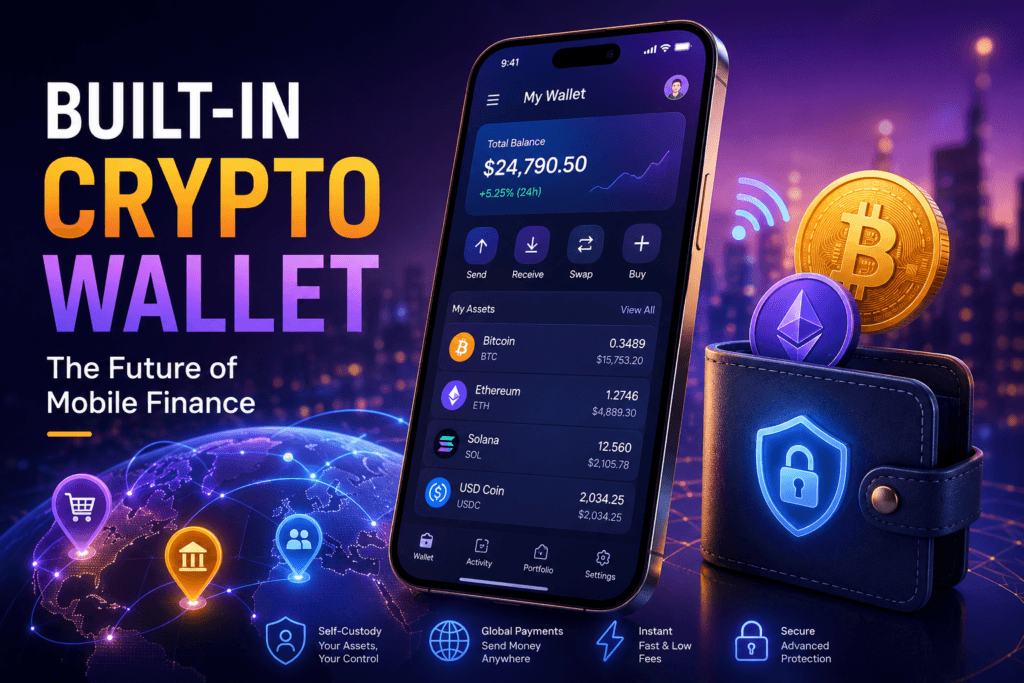
A built-in crypto wallet is a cryptocurrency wallet integrated directly into a smartphone’s operating system or hardware. Instead of downloading third-party applications, users could immediately:
✔ Receive cryptocurrency
✔ Send digital assets
✔ Store Bitcoin and altcoins
✔ Interact with blockchain applications
Furthermore, wallet functionality could become as simple and familiar as existing mobile payment systems. However, users would still need a way to acquire cryptocurrency before using built-in wallets. Many people currently purchase digital assets through exchanges such as Binance, KuCoin, Pionex, and WazirX before transferring them to self-custody wallets.
🌍 Mass Adoption Could Accelerate
Currently, one of the largest barriers to cryptocurrency adoption remains complexity. Many beginners struggle with:
⚠️ Wallet setup
⚠️ Seed phrases
⚠️ Security procedures
⚠️ Exchange transfers
However, built-in wallets could simplify the user experience dramatically. Consequently, millions of people who previously avoided cryptocurrency may feel more comfortable participating in digital asset ecosystems.
💸 Everyday Crypto Payments Could Become Normal
Today, most people still use:
💵 Cash
💳 Credit cards
📲 Banking apps
🏦 Traditional payment networks
However, if crypto wallets become standard smartphone features, everyday crypto payments could become much more practical.
Consumers might use digital assets for:
☕ Coffee purchases
🛒 Grocery shopping
🎟 Digital subscriptions
Consequently, cryptocurrency could become a more common payment method in everyday life.
🏦 Could Banks Become Less Visible?
Many financial services currently rely on traditional banking infrastructure. However, built-in crypto wallets could shift some financial activity toward:
📲 Digital wallets
🌍 Peer-to-peer transfers
⚡ Instant settlements
Importantly, this does not necessarily mean banks disappear. Instead, banks may increasingly operate behind the scenes while consumers interact directly with wallet-based financial services.
🌐 Financial Inclusion Opportunities
Around the world, millions of people still have limited access to banking services. Nevertheless, many of those same individuals own smartphones. If smartphones included crypto wallets by default, users could potentially access:
💰 Savings tools
🌍 International payments
📈 Digital investments
🔐 Self-custody solutions
💵 Stablecoin-based financial services
Therefore, built-in wallets could help expand financial participation globally.
🔒 Privacy And Self-Custody Implications
Built-in wallets could also strengthen financial sovereignty. Users may gain greater control over:
✔ Personal assets
✔ Transaction management
✔ Cross-border payments
✔ Digital ownership
Nevertheless, privacy and security would remain important considerations. The balance between convenience and self-custody could become a major discussion as adoption grows.
⚠️ Potential Challenges
Despite the potential benefits, several challenges remain which are:
⚠️ Lost device recovery
⚠️ User education requirements
⚠️ Government compliance concerns
Furthermore, smartphone manufacturers would need to implement strong security measures to protect user assets.
🤖 Could AI Wallets Become Standard?
Future smartphones may include AI-powered crypto wallet assistants. These systems could potentially help users:
📊 Track portfolios
⚡ Optimize transactions
💰 Manage spending
🔐 Improve security
📈 Analyze investments
Meanwhile, as artificial intelligence continues advancing, crypto wallets may become increasingly automated and user-friendly.
🚀 What Could The Future Look Like?
If built-in crypto wallets become standard smartphone features, the relationship between consumers and digital finance could change dramatically.
Future smartphones may support:
📲 Native crypto payments
💵 Stablecoin transfers
🏦 Tokenized financial services
🌍 Global peer-to-peer commerce
Consequently, cryptocurrency could become integrated into everyday life in ways that seem unusual today.
📚 Final Thoughts
The idea of every smartphone including a built-in crypto wallet may sound ambitious, but it aligns with the broader trend toward digital financial services.
Supporters believe:
✔ Adoption barriers would decrease
✔ Crypto payments would become easier
✔ Financial inclusion could improve
✔ Self-custody would become more accessible
Critics, however, argue:
⚠️ Security concerns remain
⚠️ Regulation may slow adoption
⚠️ User education is still necessary
⚠️ Traditional finance will continue playing an important role
For now, in 2026, built-in crypto wallets are not yet standard smartphone features. Nevertheless, if major technology companies embrace this model, smartphones could become one of the most powerful drivers of cryptocurrency adoption in history.
Key Takeaways
- Built-in crypto wallets could make cryptocurrency as easy to access as mobile banking apps.
- Smartphone-integrated wallets may significantly accelerate global crypto adoption by reducing technical barriers.
- Users could send, receive, store, and spend digital assets without downloading separate wallet applications.
- Built-in wallets may improve financial inclusion for millions of smartphone users without traditional bank accounts.
- Stablecoins could become a major payment method if wallet functionality becomes standard on smartphones.
- Self-custody and direct ownership of digital assets may become more mainstream through integrated wallet technology.
- Security, privacy, regulation, and user education remain key challenges for large-scale implementation.
- The future of mobile finance may involve smartphones acting as complete financial hubs powered by blockchain technology.
Frequently Asked Questions (FAQ)
What is a built-in crypto wallet?
A built-in crypto wallet is a cryptocurrency wallet integrated directly into a smartphone’s operating system or hardware, allowing users to manage digital assets without installing separate applications.
Why could built-in crypto wallets increase crypto adoption?
Built-in wallets simplify the user experience by removing many of the technical steps required to set up, secure, and use cryptocurrency wallets.
Could built-in crypto wallets replace traditional banking?
Not entirely. While built-in wallets may reduce dependence on some banking services, banks would likely continue providing lending, liquidity, compliance, and financial infrastructure.
How could built-in crypto wallets improve financial inclusion?
Many people own smartphones but lack access to traditional banking services. Built-in wallets could provide access to digital payments and financial tools through mobile devices.
Would stablecoins become more important if smartphones had crypto wallets?
Yes. Stablecoins are designed to maintain relatively stable values and could become practical for everyday purchases when combined with smartphone-based wallets.
Are built-in crypto wallets secure?
Security would depend on wallet design and device manufacturers. Advanced encryption, secure hardware modules, and reliable recovery systems would be critical for protecting user funds.
Could AI improve future crypto wallets?
AI-powered wallet assistants may help users manage transactions, monitor risks, optimize payments, and improve overall security.
Will every smartphone eventually include a crypto wallet?
While not guaranteed, growing adoption of blockchain technology and digital assets may encourage smartphone manufacturers to integrate crypto wallet functionality into future devices.