
As the crypto market matures, many investors are beginning to think beyond simply buying and holding assets. While strong bull markets can generate substantial gains, they can also create portfolio imbalances that increase risk over time.
As 2026 approaches its final months, many investors are evaluating whether their portfolios remain aligned with their long-term goals.
This process is commonly known as crypto portfolio rebalancing.
While rebalancing does not guarantee profits or reduce all risk, it can help investors maintain diversification, manage exposure, and avoid becoming overly dependent on a single asset or sector. Let’s explore what crypto portfolio rebalancing means and what investors may want to consider before entering 2027.
What Is Crypto Portfolio Rebalancing?
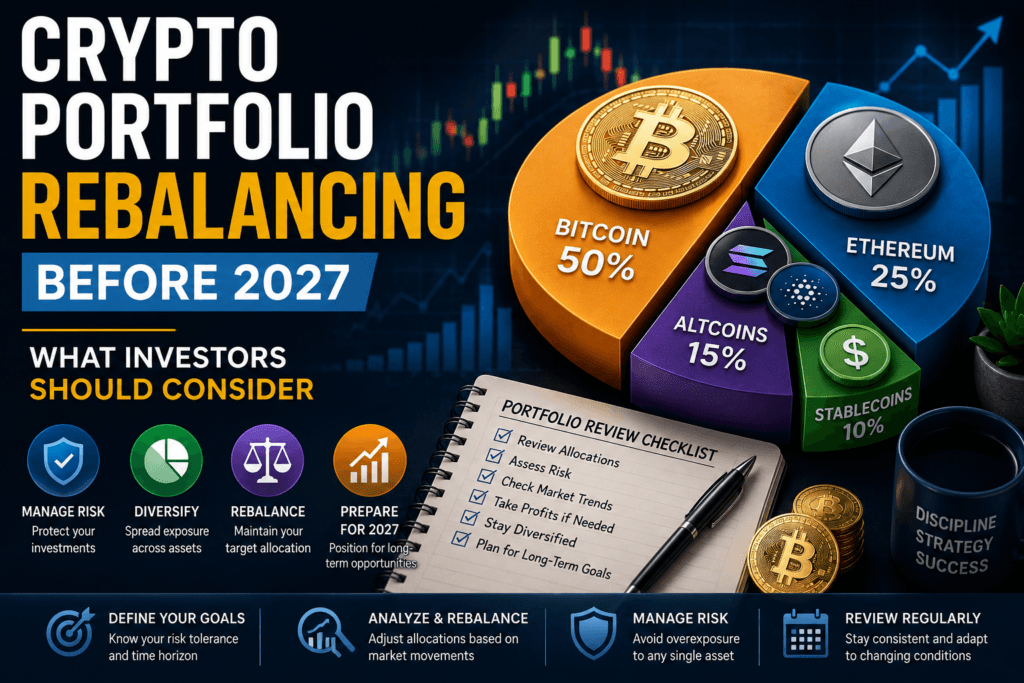
Portfolio rebalancing refers to adjusting asset allocations to maintain a desired investment strategy. For example, an investor may initially allocate:
 50% Bitcoin
 25% Ethereum
 15% Altcoins
 10% Stablecoins
Over time, market movements may significantly change these allocations. If Bitcoin experiences a strong rally, the portfolio could become heavily concentrated in a single asset. Rebalancing involves reviewing allocations and making adjustments to restore the desired balance.
Why Rebalancing Matters
One of the biggest challenges investors face is allowing emotions to influence portfolio decisions.
During strong rallies:
 Winning assets may become oversized
 Greed may encourage excessive concentration
 Risk exposure may increase
During downturns:
 Fear may lead to emotional selling
 Investors may abandon long-term plans
A structured rebalancing approach can help investors maintain discipline regardless of market conditions.
The Importance of Diversification
Diversification remains one of the most common risk-management principles across investing. In crypto, diversification may include exposure to:


Diversification does not eliminate risk, but it may help reduce dependence on any single investment outcome.
Common Rebalancing Approaches
There is no universal strategy that works for every investor. Some common approaches include:
 Time-Based Rebalancing
 Time-Based Rebalancing
Investors review portfolios at regular intervals such as:
 Monthly
Quarterly
Annually
This approach prioritizes consistency.
Percentage-Based Rebalancing
 Percentage-Based Rebalancing
Investors rebalance whenever an asset exceeds a predetermined allocation threshold.
For example:
If Bitcoin grows from 50% to 65% of a portfolio, the investor may reduce exposure to restore balance.
Goal-Based Rebalancing
 Goal-Based Rebalancing
Some investors rebalance based on changing financial goals, risk tolerance, or market conditions.
Assets Investors May Review Before 2027
Bitcoin
Bitcoin remains the largest cryptocurrency by market capitalization. Investors often evaluate:
Portfolio weighting
Long-term conviction
Risk-adjusted exposure
Institutional adoption trends
Ethereum
Ethereum continues serving as a major infrastructure layer for blockchain finance. Investors may review exposure based on:
Stablecoin activity
 Smart contract adoption
 Institutional usage
Altcoins
Altcoins can offer higher growth potential but often carry greater volatility. Investors frequently reassess:
Risk levels
Liquidity
Market narratives
Long-term viability
Stablecoins
Some investors increase stablecoin allocations to:
Preserve capital
Reduce volatility
Prepare for future opportunities
Stablecoins may play an important role in portfolio flexibility.
Managing Concentration Risk
One of the biggest reasons investors rebalance is concentration risk. Concentration risk occurs when a portfolio becomes heavily dependent on:
A single cryptocurrency
A single sector
A single narrative
For example:
A portfolio dominated entirely by AI tokens, meme coins, or a single blockchain ecosystem may face elevated risk if market sentiment shifts. Rebalancing may help reduce these vulnerabilities.
Tax Considerations
Before making any portfolio adjustments, investors should consider local tax regulations. Rebalancing activities may create:
Taxable events
 Capital gains obligations
 Reporting requirements
Regulations vary significantly by jurisdiction. Investors should consider consulting qualified tax professionals when necessary.
Market Themes Investors Are Watching
Heading into 2027, several themes continue attracting attention.
 Artificial intelligence integration
Stablecoin growth
 Digital asset regulation
Many investors use rebalancing as an opportunity to evaluate exposure to these evolving trends.
Common Rebalancing Mistakes
Investors should remain aware of several common mistakes.
 Chasing recent performance
Overtrading
Ignoring risk management
Failing to diversify
Making emotional decisions
Successful rebalancing often focuses on discipline rather than prediction.
Long-Term Perspective
Crypto markets remain highly volatile. Short-term price movements frequently dominate headlines, but long-term investors often focus on:
Asset quality
Diversification
Time horizon
Investment objectives
Rebalancing can serve as a framework for maintaining consistency during changing market conditions.
Final Thoughts
As 2027 approaches, many crypto investors may find it worthwhile to review their portfolios and assess whether current allocations still align with their goals.
Crypto portfolio rebalancing is not about predicting the next market move. Instead, it focuses on maintaining discipline, managing risk, and ensuring that portfolio allocations reflect long-term investment objectives.
While every investor’s situation is different, a thoughtful review before 2027 may help create a more balanced approach to navigating the next phase of the crypto market.
Key Takeaways
- Crypto portfolio rebalancing helps investors maintain their desired asset allocation as market conditions change.
- Diversification across Bitcoin, Ethereum, altcoins, stablecoins, and emerging sectors may help reduce concentration risk.
- Investors can rebalance portfolios using time-based, percentage-based, or goal-based approaches.
- Portfolio rebalancing is not about predicting market movements but managing risk and maintaining discipline.
- Tax implications should always be considered before making significant portfolio adjustments.
- Many investors use rebalancing opportunities to review exposure to major themes such as institutional adoption, AI crypto projects, and tokenization.
- Long-term investing success often depends on consistency, diversification, and effective risk management.
Frequently Asked Questions
What is crypto portfolio rebalancing?
Crypto portfolio rebalancing is the process of adjusting cryptocurrency allocations to maintain a desired investment strategy and risk profile.
Why is portfolio rebalancing important?
Rebalancing can help investors manage risk, avoid excessive concentration in a single asset, and maintain diversification as markets change.
How often should a crypto portfolio be rebalanced?
Some investors rebalance monthly, quarterly, or annually, while others rebalance when asset allocations move beyond predetermined thresholds.
Does portfolio rebalancing guarantee better returns?
No. Rebalancing does not guarantee profits, but it may help investors maintain discipline and manage portfolio risk over time.
Should stablecoins be included in a crypto portfolio?
Many investors use stablecoins to reduce volatility, preserve capital, and maintain flexibility for future investment opportunities.
What are the risks of not rebalancing a crypto portfolio?
Without rebalancing, portfolios may become overly concentrated in a single asset, sector, or market narrative, increasing overall risk exposure.